
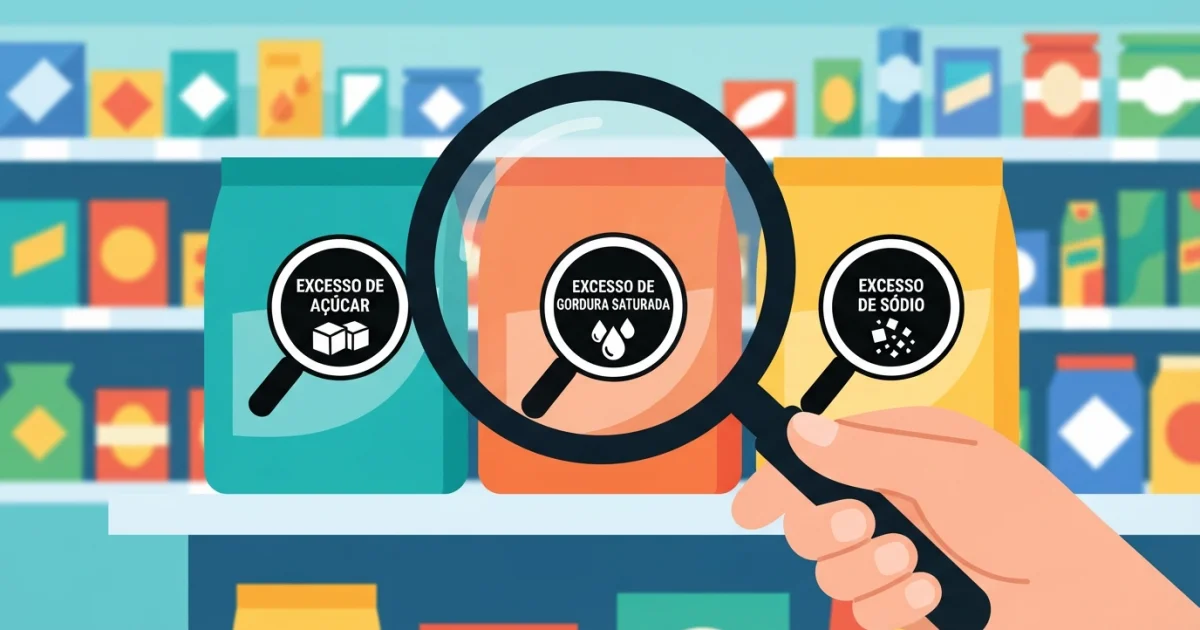
Navigating grocery aisles in Brazil has become significantly more transparent thanks to a distinct black-and-white icon shaped like a magnifying glass (lupa) stamped on the front of food packaging. Introduced by Brazil's National Health Surveillance Agency (Anvisa) through Resolution RDC 429/2020 and Normative Instruction IN 75/2020, this front-of-package nutritional labeling (FOPNL) system highlights products containing excessive levels of critical nutrients. The seal does not ban products from supermarket shelves or imply that an item is inedible; instead, it provides consumers with quick, accessible, and unvarnished facts so they can make informed dietary choices right at the point of sale.
What Is Anvisa's Front-of-Package 'Lupa' Label?
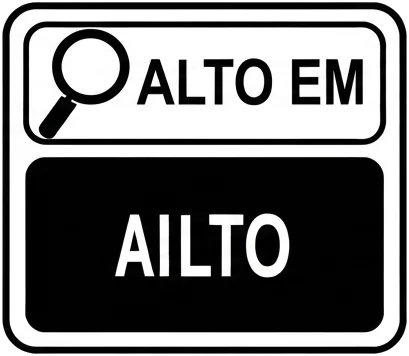
The Anvisa magnifying glass warning consists of a standardized black-and-white graphic displaying a magnifying glass icon alongside the text "ALTO EM" (High in), followed by one, two, or three specified nutrients: added sugars, saturated fats, and sodium. The visual design was carefully engineered to stand out regardless of packaging graphics or promotional artwork.
During the regulatory development phase, Anvisa evaluated several competing international models, including the black stop octagons used in Chile and Mexico, the Nutri-Score color continuum adopted in parts of Europe, and traditional traffic-light color codes. Supported by regulatory impact assessments and empirical consumer perception studies funded by the National Council for Scientific and Technological Development (CNPq), Anvisa concluded that the magnifying glass format offered the greatest clarity and visual accessibility for Brazilian shoppers across all literacy and demographic levels, directing their attention straight to excessive critical nutrients without misleading color hierarchies.
The 3 Critical Nutrients and Their Warning Thresholds
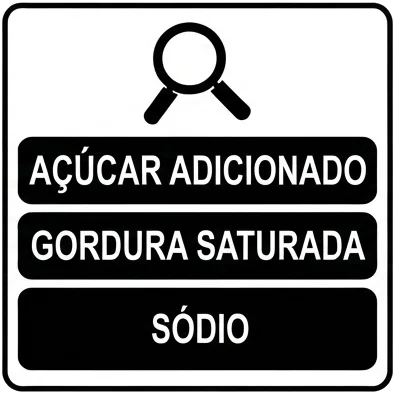
Brazil's front-of-pack warning system does not evaluate overall caloric density or total fat; instead, it targets three critical nutrients scientifically linked to chronic non-communicable diseases, such as cardiovascular disease, hypertension, obesity, and type 2 diabetes: Added Sugars (Açúcares Adicionados), Saturated Fats (Gorduras Saturadas), and Sodium (Sódio).
A common misconception is that trans fats trigger this front seal. While industrial trans fats are subject to strict legal limits and must be declared in the back-panel nutrition table, they do not trigger a front magnifying glass seal under RDC 429/2020. Anvisa sets clear numerical limits per 100 grams (for solid and semi-solid foods) or per 100 milliliters (for liquid foods):
| Critical Nutrient | Threshold: Solid & Semi-Solid Foods (per 100 g) | Threshold: Liquid Foods (per 100 ml) |
|---|---|---|
| Added Sugars (Açúcares Adicionados) | ≥ 15 g | ≥ 7.5 g |
| Saturated Fats (Gorduras Saturadas) | ≥ 6 g | ≥ 3 g |
| Sodium (Sódio) | ≥ 600 mg | ≥ 300 mg |
Because these thresholds are standardized per 100 g or 100 ml, manufacturers cannot alter designated serving sizes on paper to slip under the warning limits. If an ultra-processed food meets or exceeds these baseline parameters, the label is mandatory.
Packaging Placement and Legibility Rules
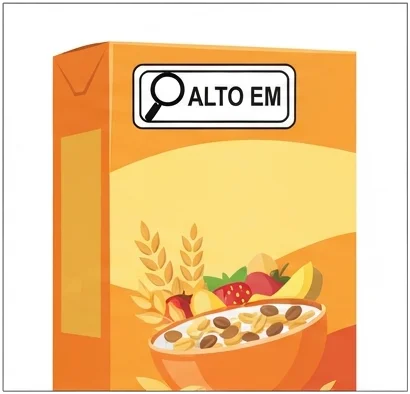
To prevent brands from hiding the warning in folds, corners, or low-contrast backgrounds, Normative Instruction IN 75/2020 (Annex XVII) establishes strict typographical and graphic placement rules:
- Location: The seal must appear strictly on the upper half of the primary front panel (painel principal), matching the primary visual field that captures eye contact during retail browsing.
- Color & Contrast: The seal must use 100% black lines and text against a pure white background, completely enclosed within a standardized border.
- Proportion: Depending on the area of the primary display panel, the seal must occupy a legally defined minimum percentage of the surface area so it cannot be shrunk into illegibility.
These front-of-pack requirements work in tandem with major improvements to the back-of-pack Nutrition Facts Table (Tabela Nutricional):
- Strict Visual Uniformity: The table must feature black typography on a pure white background. This eliminates low-contrast deceptive design practices, such as light gray lettering on translucent plastic or dark blue text on black packaging.
- Legible Typography: Standardized fonts (Arial or Helvetica) are required, with a baseline size of at least 8 points (or 6 points on exceptionally small packaging).
- Standardized 100 g / 100 ml Column: In addition to the customary household serving portion (such as "3 biscuits" or "1 cup"), nutrition tables must include values per 100 g or 100 ml. This enables consumers to easily compare nutritional densities across two competing brands.
- Mandatory Disclosure of Added Sugars: The table must explicitly list "Açúcares Adicionados" directly beneath total carbohydrates, ending ambiguity between natural fruit sugars (fructose), dairy sugars (lactose), and industrially added syrups.
Restrictions on Nutritional and Marketing Claims
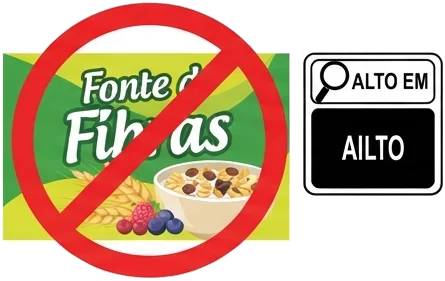
A central breakthrough in RDC 429/2020 is how it restricts nutritional marketing claims (alegações nutricionais). In the past, products loaded with sodium or saturated fats could still promote marketing slogans like "Source of Fiber" or "Rich in Vitamin C" in bold letters on the front label, effectively creating an unearned health halo.
Under Anvisa's framework, if a food product carries an "Alto em" seal for a specific critical nutrient, it is strictly prohibited from displaying positive nutritional claims regarding that same nutrient or any related ingredient variant. For example:
- A packaged snack carrying an Alto em Sódio magnifying glass cannot claim to be "light in sodium," "low sodium," or "reduced sodium," even if the recipe contains less salt than an older version or a market rival.
- A cookie stamped with Alto em Gordura Saturada cannot display claims celebrating zero trans fats or reduced fat.
Furthermore, if a product carries a magnifying glass seal for one nutrient but makes an approved claim about an unrelated nutrient (for instance, a product high in added sugar claiming "rich in calcium"), that positive claim cannot appear in the upper half of the front display panel where the magnifying glass sits.
Compliance Deadlines and Implementation Phases
Published in October 2020, RDC 429/2020 and IN 75/2020 formally took effect on October 9, 2022. To minimize industrial waste and allow packaging redesigns across diverse business sectors, Anvisa instituted phased enforcement schedules:
- October 9, 2022: Immediate compliance required for all entirely new product formulations entering the Brazilian market.
- October 9, 2023 (12-month mark): General food and beverage products already on supermarket shelves were required to transition fully to the updated front warnings and standardized nutrition tables.
- October 9, 2024 (24-month mark): Deadline for medium-term adjustments across specific food processing sectors.
- October 9, 2025 (36-month mark): Mandatory compliance for non-alcoholic beverages packed in multi-trip, returnable glass bottles.
- October 9, 2026 (48-month mark): Final compliance deadline for micro-enterprises, individual microentrepreneurs (MEI), and registered family agricultural cooperatives.
Standard industrial packaged goods across Brazilian supermarkets are now fully subject to these regulations. When you browse retail shelves, products that exceed statutory limits for added sugars, saturated fats, or sodium must clearly display the magnifying glass.
Frequently Asked Questions
Which nutrients trigger the Anvisa magnifying glass warning?
Anvisa requires the magnifying glass warning exclusively for three critical nutrients: Added Sugars (Açúcares Adicionados), Saturated Fats (Gorduras Saturadas), and Sodium (Sódio). Calories, total fats, trans fats, and artificial sweeteners do not trigger this front-of-package seal, though their values remain strictly regulated within the back-panel nutrition facts table.
Can a food product carry multiple magnifying glass warnings simultaneously?
Yes. If a recipe exceeds official thresholds for multiple nutrients, Anvisa mandates a single composite magnifying glass seal with multiple indicator bars. The package will display a combined warning stating, for instance, "ALTO EM: AÇÚCAR ADICIONADO e GORDURA SATURADA" or an icon grouping all three: "AÇÚCAR ADICIONADO, GORDURA SATURADA e SÓDIO."
Can a product with a magnifying glass for saturated fat still claim to be 'zero sugar'?
Yes, provided the claim complies with technical nutritional regulations. Under RDC 429/2020, marketing claims are prohibited only for the specific nutrient that triggered the "Alto em" warning. A product bearing an "Alto em Gordura Saturada" seal cannot claim to be low in fat, but it can highlight "Zero Açúcar" if it meets the legal criteria for added sugar claims—provided that claim is positioned away from the upper display zone reserved for the warning seal.
Are artisanal and small-scale food producers exempt from the magnifying glass seal?
No, small-scale producers and family farmers are not permanently exempt. To prevent sudden financial strain, Anvisa granted micro-enterprises (ME), individual microentrepreneurs (MEI), and artisanal family agriculture businesses an extended adaptation timeline of up to 48 months (until October 2026). Once this transition window closes, any small-scale producer whose processed products exceed the critical nutrient limits must include the front-of-pack magnifying glass warning.


Deixe um comentário
Seu endereço de e-mail não será publicado. Campos obrigatórios são marcados com *